Método PONS
Functional specialization: The core of the PONS Method
Success does not lie in doing many things acceptably, but in functional specialization.
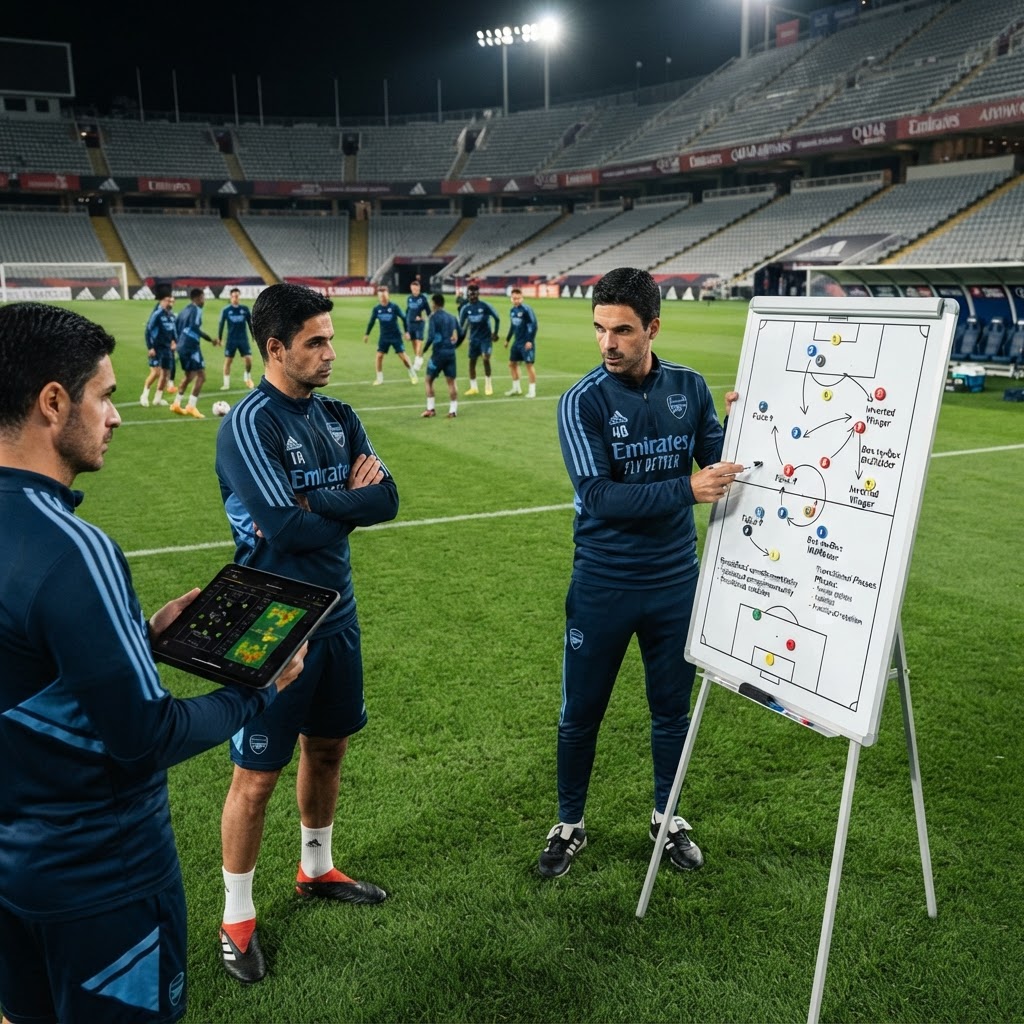
This idea illustrates the difference between having football concepts and possessing a methodology capable of structuring how they are learned, applied, and verified. There is a growing trend in modern football towards the search for 'total' players, capable of occupying any position with competence. However, this search for absolute versatility often leads to a dilution of competitive efficacy. The central thesis we must adopt is that excellence does not lie in the ability to do many things acceptably, but in functional specialization within a collective architecture designed to maximize the specific value of each piece. Misunderstood versatility generates players who, by dominating all areas, lose the depth necessary to create imbalances in critical situations. The reason is clear: elite performance requires deep automation of specific processes and decision-making contextualized to a given position. When a footballer is an excessive 'wildcard,' their mental map for problem-solving becomes too broad and, therefore, less precise in moments of high pressure. Performance architecture requires that each profile provide a differential advantage that the system can exploit. The practical implication is that training must focus on 'expanded specialization': the player must master a high-level functional niche, and from that strength, understand how their actions impact adjacent structures. Instead of training generalists, we must build architectures of specialist players whose functions intertwine in a complementary way. To visualize this, imagine a constellation of gears of different sizes and shapes; we do not try to make every piece the same, but rather ensure that the coupling between their different geometries is perfect so that the system turns without friction. We do not seek uniformity; we seek an integration of specialties that, together, create an irreducible competitive advantage. The success of the club does not depend on the versatility of the individual, but on the architecture of their functional complementarity. The PONS Method turns this principle into an architecture of relationships, decisions, and transfer rather than leaving it as an isolated statement.
Continue learning through the most relevant PONS route