Método PONS
The end of choreography: Towards adaptive architecture
Why true institutional excellence begins when you abandon automation in training.
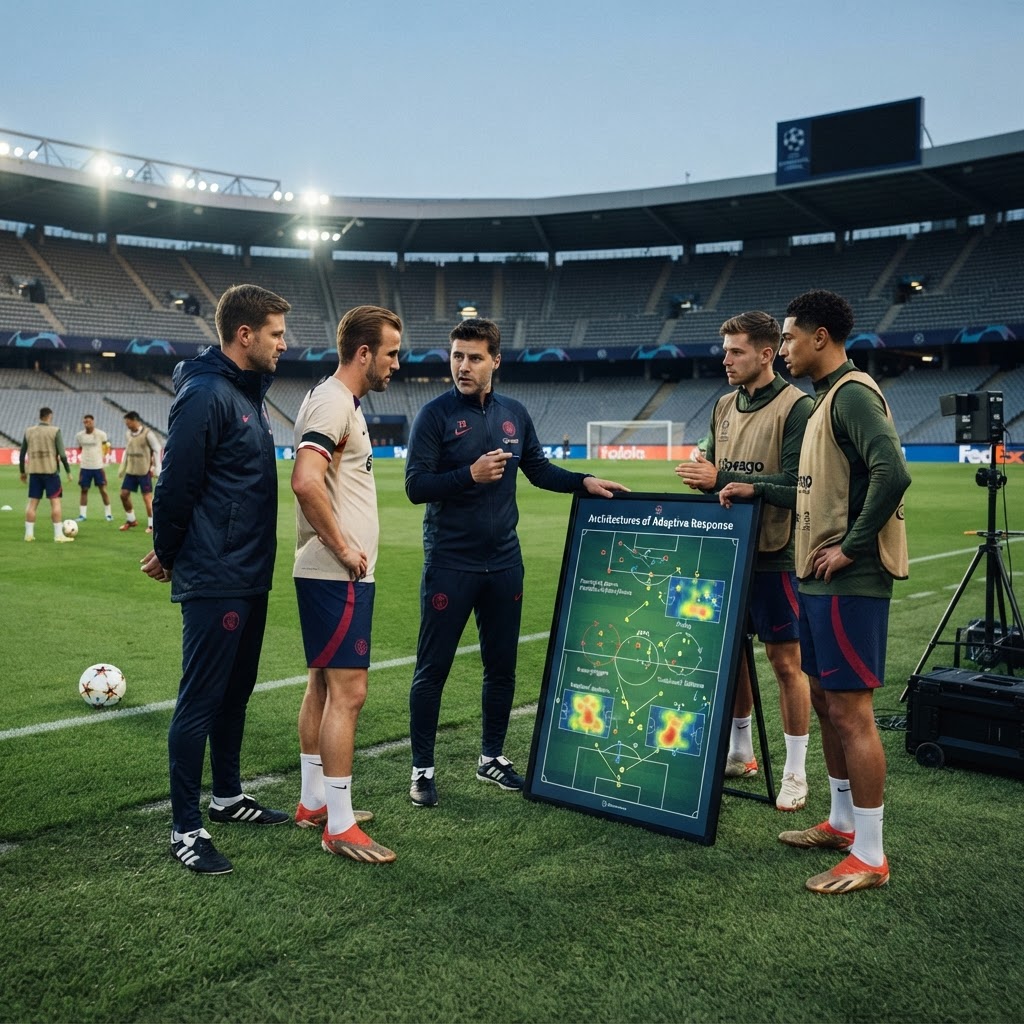
This idea illustrates the difference between having football concepts and possessing a methodology capable of structuring how they are learned, applied, and verified. The relentless search for tactical automation is, paradoxically, the greatest risk to performance in elite football. Many coaching staffs design sessions under the fallacy of choreography: if the player repeats the exact movement in training, they will execute it in competition. However, the reality of the game is an entropic system where the variables of time and opposition invalidate any predefined script. My thesis is clear: we must stop training for mechanical perfection and begin designing architectures of adaptive response. Training should not be a rehearsal of movements, but an ecosystem of low-frequency, high-intensity problems. The coach's job is not to dictate the solution, but to build an architecture where decision-making is the central axis of the workload. If an exercise does not allow the player to fail, correct, and adjust in a window of less than two seconds, we are not training football; we are performing low-transfer choreography. Sustainable performance depends on our ability to manage uncertainty by creating shared frames of reference between the staff and the squad. This means the staff must integrate cognitive evaluation into the physical load, ensuring that fatigue does not degrade analytical capacity. The goal is not to have players who follow a map, but players capable of redesigning the map while the ball is rolling. In visual terms, this architecture is best represented by a network of interconnected nodes where, upon the breaking of an axis, the rest of the system redistributes the flow instantaneously. Imagine a complex geometric structure that, upon being struck, reconfigures itself in milliseconds to maintain its integrity. That is the hallmark of a tactically mature team: the capacity to absorb chaos and transform it into a logical attacking or defensive structure. By professionalizing this methodology, we elevate the club above random results, turning training management into an engine of institutional continuity and operational excellence. The PONS Method converts the principle into an architecture of relationships, decisions, and transfer instead of leaving it as an isolated statement.
Explore David Pons professional profile and strategic collaboration