Método PONS
Performance architecture: Managing uncertainty
Performance architecture for managing uncertainty.
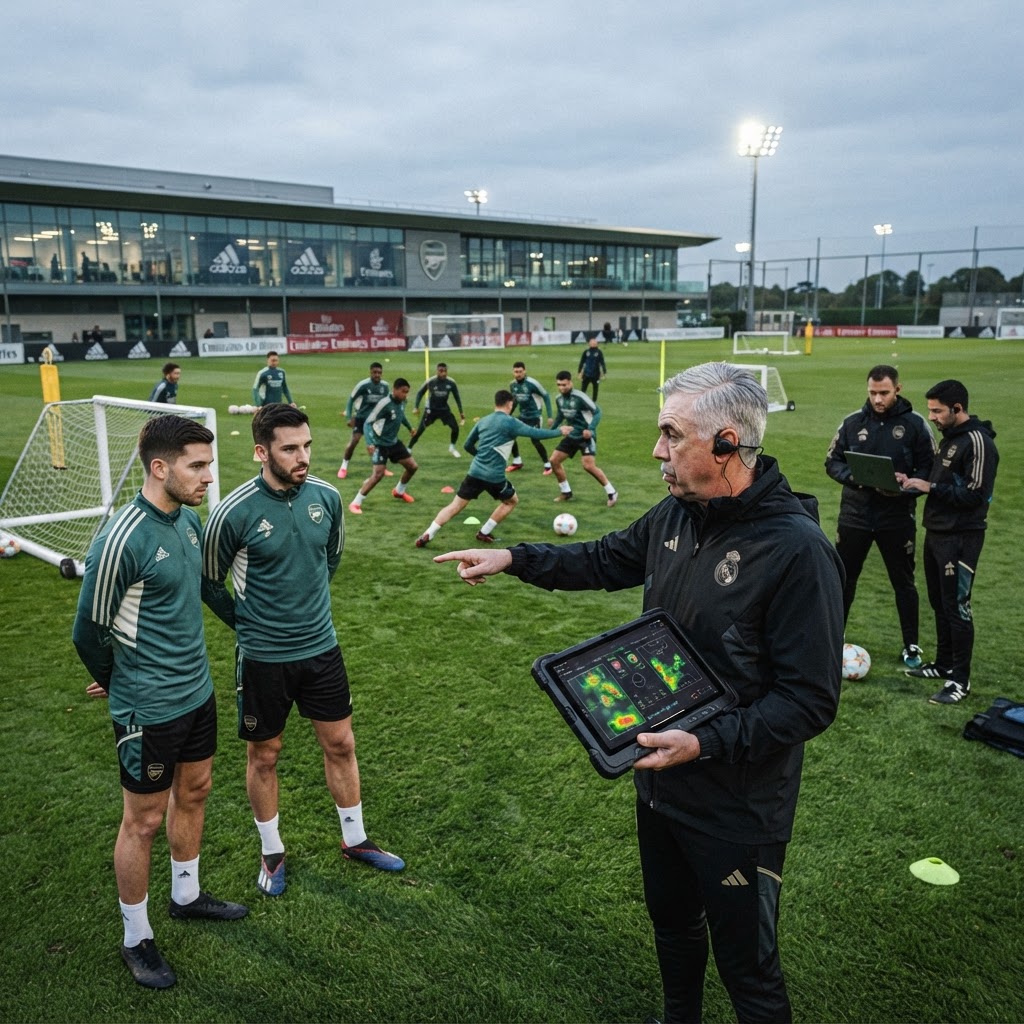
This idea illustrates the difference between having football concepts and having a methodology capable of structuring how they are learned, applied, and verified. Contemporary football training is going through a crisis of over-determination. Many coaches and methodologists have fallen into the trap of trying to control all variables in the training session. The result is not a more precise player, but an executor chained to a game architecture so rigid that it collapses at the first real unexpected event. The thesis is clear: excellence does not lie in eliminating chaos, but in designing environments where the footballer learns to thrive through managed uncertainty. Training should not be a closed script, but a generator of problems that require creative solutions in real time. When we overprotect the player with analytical exercises that eliminate friction, we also eliminate the capacity for adaptation. The practical implication is overwhelming: we must transition from training models based on the repetition of patterns (the 'what to do') towards training architectures based on the provocation of dilemmas (the 'why and when to decide'). An effective exercise is not one that comes out perfect, but one that exposes a weakness in the player's judgment. The capacity for tactical resilience is a club's most valuable asset, and it is only built if the training session includes margins for error where the player is forced to leave their cognitive comfort zone. The PONS Method turns the principle into an architecture of relationships, decisions, and transfer instead of leaving it as an isolated statement.
Continue learning through the most relevant PONS route